TACACS+ vs. Radius: What’s the Difference?
As cyberattacks grow more sophisticated, organizations face increasing pressure to secure every layer of their networks. What once meant protecting administrator logins to routers and switches now extends to a much broader attack surface: users connecting via Wi-Fi, VPNs, cloud applications and remote corporate resources.
Centralized Authentication, Authorization, and Accounting (AAA) has become the standard approach, and two AAA protocols frequently compared are TACACS+ and RADIUS. Both enable centralized control, but they were designed with different purposes in mind.
Understanding the differences between TACACS+ and RADIUS is necessary when designing secure access control. In this guide, we’ll explain both TACACS+ and RADIUS, their differences, and how they can work together for improved network security.
What Is TACACS+?
TACACS+, Terminal Access Controller Access-Control System Plus, is a centralized authentication protocol used to control administrative access to network infrastructure devices such as routers, switches, and firewalls.
When an administrator logs into a device, the device sends the request to a TACACS+ server. The server validates credentials and returns permission decisions.
TACACS+ separates three security functions:
- Authentication
- Authorization
- Accounting
This separation allows detailed control over administrative actions. For example, an engineer may be permitted to view the configuration but not modify routing tables.
TACACS: A High-Level Analysis
The Terminal Access Controller Access-Control System (TACACS) is a network protocol developed to centralize and automate the authentication, authorization, and accounting (AAA) of network devices such as routers, switches and firewalls. In 1984, BBN Technologies developed TACACS and released it as an open standard protocol.
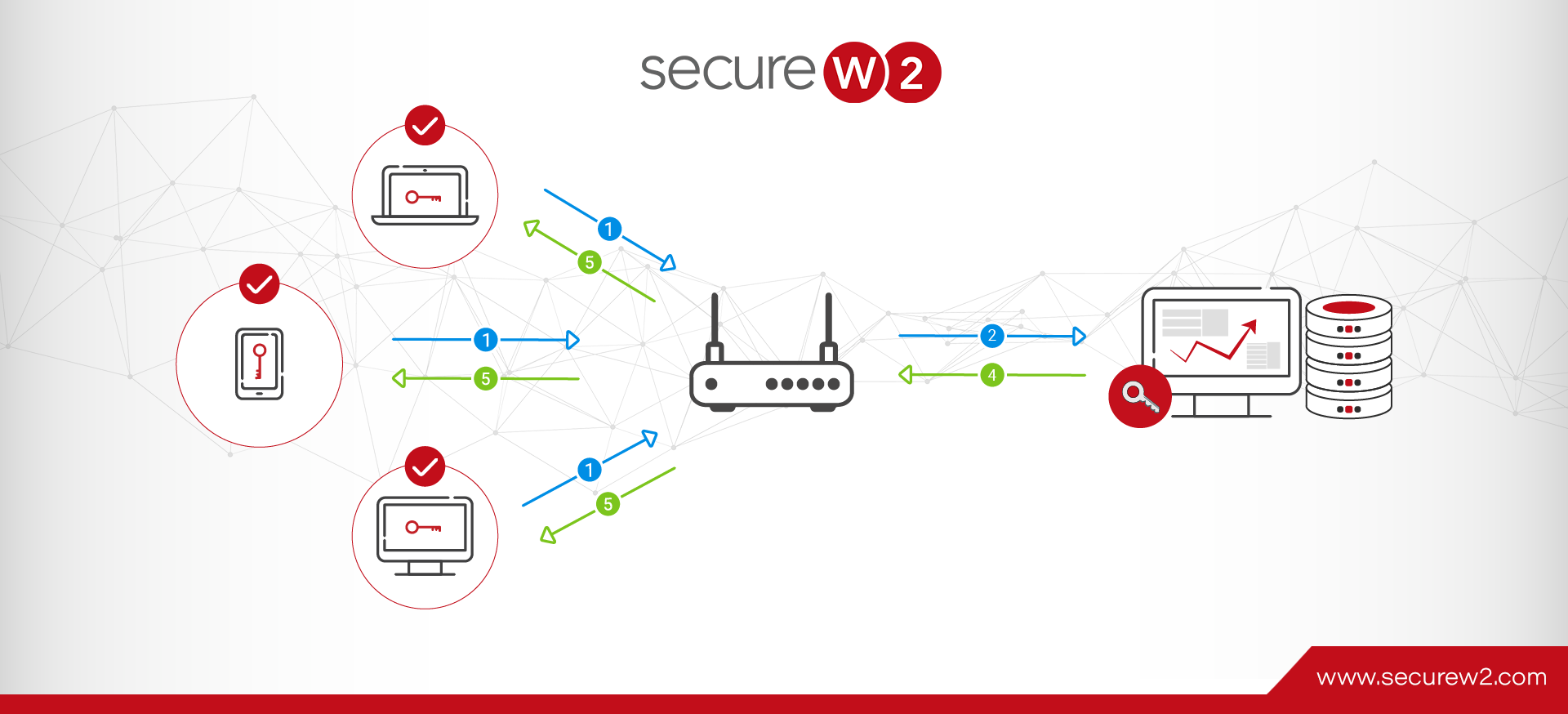
In a TACACS architecture, every device authenticates through one central point, as shown here:
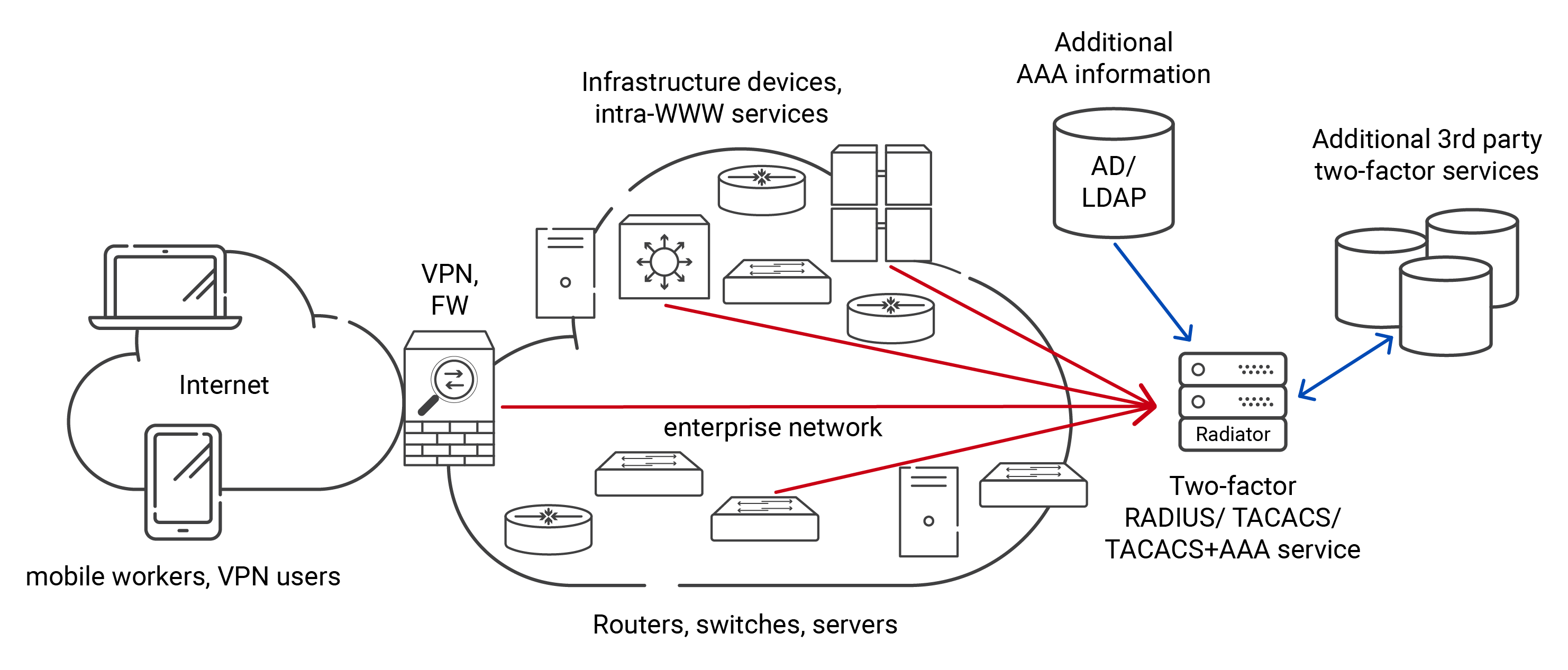
TACACS+ has superseded TACACS and provides a more secure option with enhanced encryption, support for authentication mechanisms, and transmission control protocol (TCP) for better communication.
How Does the TACACS+ Protocol Work?
The TACACS+ protocol functions on the client-server model. The network device acting as a TACACS+ client (such as a router or switch) requests access to a network. The TACACS+ server authenticates and authorizes the user to access the network. The process follows these steps:
- The remote access server first places an authentication request to the TACACS+ server.
- The TACACS+ server sends the access request packet to its database for verification.
- Upon verification of the user credentials, the TACACS+ server transmits the authorization to the remote access server.
- If the user can access the resource, the remote access servers grant or deny access based on the authorization message.
TACACS+ can manage attributes, define users and control authentication services. Administrators can set attributes through the options section in the operation framework of a service, file name and shared secret key. The protocol is further described in IETF RFC 8907.
An authentication process starts when the client initiates a TCP session. The TCP transmits attribute pairs to the server in a standard header format, followed by a variable-length parameter field. An AAA request is captured as a header and sent in a clear format; the rest is sent as a parameter. This ensures the parameter field is encrypted for confidential, secure message transmission.
The TACACS variable parameter provides extensibility and site-specific customization, and the TCP protocol provides a secure and safe delivery of the secret message. The server’s capacity, however, could be impacted by the format and protocol, as the format puts a load on the communication capacity of a server.
What Is RADIUS?
Remote Authentication Dial-In User Service (RADIUS) is used widely as a network security protocol based on the client-server model. When a device connects to a protected network, the access point or gateway forwards the request to a RADIUS server, which validates identity and returns a policy decision.
With the RADIUS protocol, clients can place requests to access services from any location. Supported by on-premises and cloud-based RADIUS servers, it scales well across large, distributed networks and is a widely adopted IETF-standard protocol used for network access authentication.
How Does the RADIUS Protocol Work?
Here’s how the RADIUS protocol works:
- A user places a Point-to-Point Protocol (PPP) authentication request to the RADIUS client, i.e., the network access server (NAS).
- The NAS asks for credentials in case of a Password Authentication Protocol (PAP) or a challenge in case of a Challenge Handshake Authentication Protocol (CHAP).
- The user supplies the requested credentials.
- The RADIUS client sends the encrypted credentials to the RADIUS server.
- The RADIUS server presents a response in the form of Accept, Reject or Challenge.
- The RADIUS client provides access to services and user resources based on Accept or Reject parameters.
In modern deployments, RADIUS most commonly operates via 802.1X with various Extensible Authentication Protocol (EAP) methods rather than classic PPP/PAP/CHAP.
Unlike TACACS+, RADIUS is not limited to administrators. It verifies:
- Wi-Fi users
- VPN connections
- Remote employees
- Devices joining a network
The communication between a Network Access Server (NAS) and RADIUS uses the User Datagram Protocol (UDP). The RADIUS authentication protocols are critical in 802.1X architecture, where PPP and EAP are used. They perform the function of AAA:
- Authentication: matches user credentials to verify identity
- Authorization: determines user permissions
- Accounting: tracks user network resources
For a more detailed description of the RADIUS protocol, review IETF RFC 2865.
This diagram illustrates a standard authentication flow. A RADIUS server sends server certificates to verify itself to clients, and can also mimic a proxy client to another RADIUS server or to different kinds of authentication servers.

TACACS+ vs RADIUS: Core Functional Differences
In simple terms, TACACS+ controls who can manage the network, while RADIUS controls who can use the network. Here’s an overview of the functional differences between the two:
|
Feature |
TACACS+ |
RADIUS |
|
Primary Purpose |
Device administration |
Network access authentication |
|
Typical Users |
Network administrators |
Employees and devices |
|
Access Type |
CLI and configuration access |
Wi-Fi, VPN and network login |
|
Standardization |
Created for Cisco devices, but now an open standard protocol |
Open standard protocol |
|
Transport Protocol |
TCP |
UDP, but can support TCP |
|
Ports |
TCP port 49 |
UDP ports 1812 or 1645 (authentication) and ports 1813 or 1646 (accounting) |
|
Authentication Scope |
Infrastructure control |
User and device connectivity |
|
AAA Separation |
Separates each into distinct steps |
Combines authentication and authorization together in one step |
Primary purpose and typical users are the most important distinctions between RADIUS vs. TACACS+. TACACS+ regulates administrative device access, while RADIUS regulates user and device network access control for both administrators and end users. That’s why it’s not always an exclusive choice between RADIUS vs. TACACS+, but rather which use cases are best suited to RADIUS and which to TACACS+.
Access type matters, too. TACACS+ regulates access with command-level control, determining which commands and configuration changes administrators can make. But RADIUS regulates network access (Wi-Fi, VPN and network logins), sometimes with role-based access controls (RBAC).
While TACACS+ was originally created for use with Cisco devices, it’s now an open standard protocol compatible with a broader range of modern network devices. RADIUS has always been an open standard protocol.
Transport protocol is another important distinction. While TACACS+ uses Transmission Control Protocol (TCP), a secure connection-based protocol, RADIUS operates with User Datagram Protocol (UDP), which doesn’t require an established connection before transmitting data. However, many modern RADIUS implementations, including JoinNow Cloud RADIUS, support both TCP and UDP.
TACACS+ and RADIUS also authenticate for different scenarios. TACACS+ authenticates devices for infrastructure control: who can access specific servers, configurations and commands. But RADIUS authenticates credentials or certificates for user and device access to a network.
TACACS+ vs. RADIUS functions also vary by authentication, authorization, and accounting (AAA) separation. TACACS+ distinguishes each function into separate steps, allowing fine-grained control over permissions at each stage and the ability to use a different service for either authentication or accounting if desired.
RADIUS combines authentication and authorization together, which means if you use RADIUS for authentication, you must also use it for authorization, and vice-versa.
Both TACACS+ and RADIUS support external accounting.
Next, we’ll go into more detail about key differences in encryption, authorization and access control, and accounting and logging between RADIUS vs TACACS+.
Encryption Differences
Encryption is one of the most important technical distinctions between TACACS+ and RADIUS. Both protocols protect authentication traffic, but they do so in different ways and for different operational goals. TACACS+ prioritizes protecting administrative activity by encrypting the entire communication session, while RADIUS focuses on securely validating identity while still allowing network devices to read certain authorization attributes needed to apply access policies.
|
Security Feature |
TACACS+ |
RADIUS |
|
Encryption |
Entire packet encrypted |
Password encrypted |
|
Traffic Visibility |
Hidden |
Partial visibility |
|
Command Protection and Accounting |
Yes |
Not applicable |
|
Session Confidentiality |
Strong |
Moderate |
TACACS+ encrypts the entire payload of each packet, including commands and authorization data, providing strong protection for administrative activity. RADIUS encrypts authentication credentials but not all attributes. This design is intentional because RADIUS must interact with many networking devices and policies.
Understanding these differences helps determine which protocol better fits administrative security versus network access control.
Authorization and Access Control Differences
Authorization is where the operational roles of TACACS+ and RADIUS become clear. While both protocols can approve or deny access, they control different types of activity after authentication succeeds. TACACS+ focuses on what an administrator is allowed to do once logged into a network device, whereas RADIUS determines how a user or device is allowed to access the network itself.
This difference in authorization granularity explains why organizations often evaluate RADIUS vs TACACS+ based on whether they need to protect infrastructure management or regulate network connectivity.
TACACS+ Authorization:
- Controls administrator privileges
- Command-level permissions
- Configuration restrictions
RADIUS Authorization:
- Assigns network policies
- VLAN assignment
- Device posture policies
- Conditional access
RADIUS is better suited for enforcing who can connect to the network and under what conditions.
Accounting and Logging Differences
Both TACACS+ and RADIUS record authentication events, but the type of activity they monitor reflects what each protocol is designed to protect.
TACACS+ focuses on administrative accountability by tracking what administrators do after logging into network devices. RADIUS focuses on connectivity by recording user sessions, device access and network usage. This distinction helps organizations decide whether they need detailed oversight of infrastructure management or visibility into who and what is accessing the network.
|
Logging Type |
TACACS+ |
RADIUS |
|
Tracks admin commands |
Yes |
No |
|
Tracks login sessions |
Yes |
Yes |
|
Tracks network usage |
No |
Yes |
|
Tracks device connections |
No |
Yes |
TACACS+ vs. RADIUS in Modern Networks
Modern networks include mobile devices, cloud applications and remote users. Access control must be based on identity, not physical location.
TACACS+ was built for static environments where administrators worked on site. RADIUS supports dynamic environments with distributed connectivity.
|
Capability |
TACACS+ |
RADIUS |
|
Cloud Support |
Limited |
Strong |
|
Remote Users |
Not designed for |
Fully supported |
|
Device Authentication |
Not designed for |
Yes, via 802.1X or certificates |
|
Zero Trust Alignment |
Partial |
Strong |
Because modern organizations must continuously authenticate employees and devices, RADIUS often becomes the core authentication platform.
Advantages of Each Protocol
Because the two protocols have very different use cases, it’s important to be careful when comparing advantages. The advantages of TACACS+ vs. RADIUS aren’t always directly comparable. In many cases, organizations will choose a combination of both. However, in some ways, one protocol will have advantages over the other.
Advantages of TACACS+ Over RADIUS
- Device Management:
- TACACS+ is a device administration protocol with advanced device management capabilities.
- RADIUS is a network access protocol that doesn’t manage devices, but many providers integrate with mobile device management (MDM) and unified endpoint management (UEM) tools.
- Full Packet Encryption:
- TACACS+ encrypts all packets with a shared secret.
- RADIUS encrypts only the password.
- Reliability:
- TACACS+ uses TCP transport to guarantee packet delivery.
- RADIUS uses UDP, which doesn’t require a connection to transmit data.
- AAA Separation:
- TACACS+ separates authentication, authorization, and accounting, so you can use different protocols for each.
- RADIUS combines authentication and authorization, but accounting is separate.
Advantages of RADIUS Over TACACS+
- Wi-Fi Network Access Control:
- RADIUS supports 802.1X Wi-Fi authentication.
- TACACS+ doesn’t manage endpoint network access.
- Broad Device Support:
- RADIUS is an open standard protocol that works with most modern devices.
- While TACACS+ now works with a broad range of devices, it was originally designed for Cisco devices.
- Speed:
- RADIUS servers often use UDP, a connectionless protocol that authenticates faster with minimal resource consumption and less network latency.
- TACACS+ uses TCP, which is more reliable but less efficient.
- Scalability:
- RADIUS is lightweight and fast with simple infrastructure, making it easy to scale to thousands of users and devices.
- TACACS+ is less suited to large-scale use across distributed networks.
Can TACACS+ and RADIUS Be Used Together?
Yes. Many enterprises deploy both TACACS+ and RADIUS because they address different security layers. TACACS+ protects administrative access to infrastructure devices, ensuring that only authorized personnel can manage routers, switches and firewalls.
RADIUS, in contrast, controls user and device connectivity to the network by authenticating access to Wi-Fi, VPNs and other services.
Used together, they provide complementary protection: TACACS+ secures who can operate the network, while RADIUS secures who can use it.
In summary:
- TACACS+ protects network administration
- RADIUS protects network access
TACACS+ or RADIUS: Which Is the Better Choice for Your Organization?
The TACACS+ vs RADIUS discussion is less about choosing a winner and more about understanding their roles. TACACS+ and RADIUS are both excellent network security protocols per industry standards, but each protocol was designed to protect a different layer of the environment.
As organizations shift to remote work, cloud applications and unmanaged endpoints, the security boundary is no longer the device configuration interface but the connection point. Now that one in five employees work remotely, most access happens through Wi-Fi, VPNs and remote services rather than direct console administration.
Because of this change, controlling network access has become the larger security priority. So, in many modern deployments, organizations choose both TACACS+ and RADIUS for different purposes.
TACACS+ continues to protect infrastructure administration, while RADIUS serves as the primary foundation for identity-based access control across the entire environment.
When to Use TACACS+
TACACS+ is the right protocol when you need to secure administrative control of firewalls, routers and switches (especially Cisco devices), ensuring only authorized personnel can manage critical infrastructure. It also supports external authorization functions.
It’s ideal for complex environments with a multi-tiered administrative department that requires fine-tuned, command-level control. TACACS+ also offers detailed accounting (including command accounting) with full audit trails to meet strict compliance and security requirements.
However, remember that TACACS+ uses TCP, which prioritizes security over efficiency. If you need lightweight, efficient authentication, TACACS+ is not the best choice.
When to Use RADIUS
Choose RADIUS when you need to secure connectivity itself by verifying end users and devices before they’re allowed onto the network. RADIUS is ideal for controlling access to network services including Wi-Fi and VPN connections and is highly interoperable with equipment from most vendors.
RADIUS is perfect for efficient, high-volume user authentication with minimal resource demands. It’s also more budget-friendly, with lower hardware requirements and a simple onboarding process.
Plus, RADIUS is highly extensible for large-scale enterprise applications.
Moving Toward Identity-Based Access
Traditional network security assumed that anything inside the corporate network perimeter could be trusted. Following this model, once a device is successfully connected, it receives broad access to internal resources. This worked when users were on site and devices were company-managed, but it breaks down in environments with remote workers, cloud services and unmanaged endpoints.
Modern security strategies instead focus on identity verification at every connection attempt. Access decisions are no longer based solely on location, but also on the user, the device they are using and whether that device meets security requirements. Cloud RADIUS supports this approach through policy-based authentication, device validation and ongoing session control.
These capabilities allow organizations to continuously evaluate access and enforce restrictions dynamically, making RADIUS well-suited for continuous-trust architectures where trust is never assumed and must always be verified.
Unify Authentication With Cloud RADIUS and SecureW2
Today’s networks extend far beyond a single office. Users connect from home, devices move between networks and applications operate across both on-premises and cloud environments. Protecting only administrator logins is no longer sufficient. Organizations need consistent authentication and enforceable policies for every user, device and connection attempt.
Cloud RADIUS provides centralized authentication, access policy enforcement and detailed activity logging across wired networks, Wi-Fi and remote access. SecureW2 complements this with certificate-based identity verification and automated onboarding, allowing devices to authenticate securely without relying on shared credentials or manual configuration. Together, they create a single, reliable source of truth for access decisions while improving visibility for security and compliance teams.
Schedule a demo to see how identity-based authentication can simplify operations and strengthen security across your entire environment.
TACACS+ vs. RADIUS FAQs
What is the main difference between RADIUS and TACACS+?
The main difference between RADIUS and TACACS+ is that RADIUS controls who can access the network while TACACS+ controls who can administer the network. RADIUS is commonly used for network access control, such as Wi-Fi, VPN and 802.1X authentication, while TACACS+ is primarily used for administrative access to network devices like routers, switches and firewalls. TACACS+ also separates authentication, authorization, and accounting (AAA) into distinct processes, giving administrators more granular control over permissions. RADIUS combines authentication and authorization into a single process and is generally preferred for end-user network access.
Is TACACS+ still relevant today?
Yes, TACACS+ is still widely used in modern enterprise environments, especially for securing administrative access to infrastructure devices. Many organizations rely on TACACS+ to centrally manage administrator authentication and enforce role-based access controls across networking equipment. While RADIUS dominates user and device authentication for Wi-Fi and VPN access, TACACS+ remains valuable for infrastructure management because of its detailed command authorization and auditing capabilities.
Which is more secure: RADIUS or TACACS+?
Both protocols can be highly secure when properly configured, but TACACS+ generally provides stronger protection for administrative sessions because it encrypts the entire payload of the authentication exchange. Traditional RADIUS only encrypts the user password portion of packets, although modern implementations often improve security by using protocols like RadSec (RADIUS over TLS). Security also depends on factors such as MFA enforcement, certificate usage, segmentation and logging practices.
Why do enterprises prefer RADIUS for Wi-Fi authentication?
Enterprises prefer RADIUS for Wi-Fi authentication because it integrates well with 802.1X and supports centralized authentication for large numbers of users and devices. RADIUS can work with identity providers, certificate-based authentication, MFA, and directory services to enforce secure access policies across wireless and wired networks. It is also widely supported by access points, switches, VPNs and network access control solutions.
Does Cisco ISE use RADIUS or TACACS?
Cisco ISE supports both RADIUS and TACACS+, since these protocols are used for different purposes. Network administrators use RADIUS to control who accesses the network and TACACS+ to control who can make changes to the network (including which particular commands they can use).
Does RADIUS offer multiprotocol support?
Some resources claim that RADIUS does not offer multiprotocol support, but this is misleading. In this case, “multiprotocol support” refers to network protocols — most notably, Internet Protocol (IP), the standard for how data travels across networks. Sources claiming RADIUS doesn’t offer “multiprotocol support” point to mostly unsupported network protocols that were phased out during the 1990s and early 2000s, including AppleTalk Remote Access (ARA), NetBIOS Frame Protocol Control (NBFCP), Novell Asynchronous Services Interface (NASI) and X.25 PAD connection. While TACACS+ supported these now-obsolete protocols in its early days, today, both TACACS+ and RADIUS primarily support IP.
Does RADIUS support features like certificate-based authentication or cloud identity providers?
Yes. Modern RADIUS servers (especially cloud-based ones) excel at integrating with Azure AD/Entra ID, Google Workspace, Okta and certificate-based methods (EAP-TLS). This makes RADIUS highly suitable for passwordless device posture checking and dynamic policy enforcement in continuous-trust architectures.